
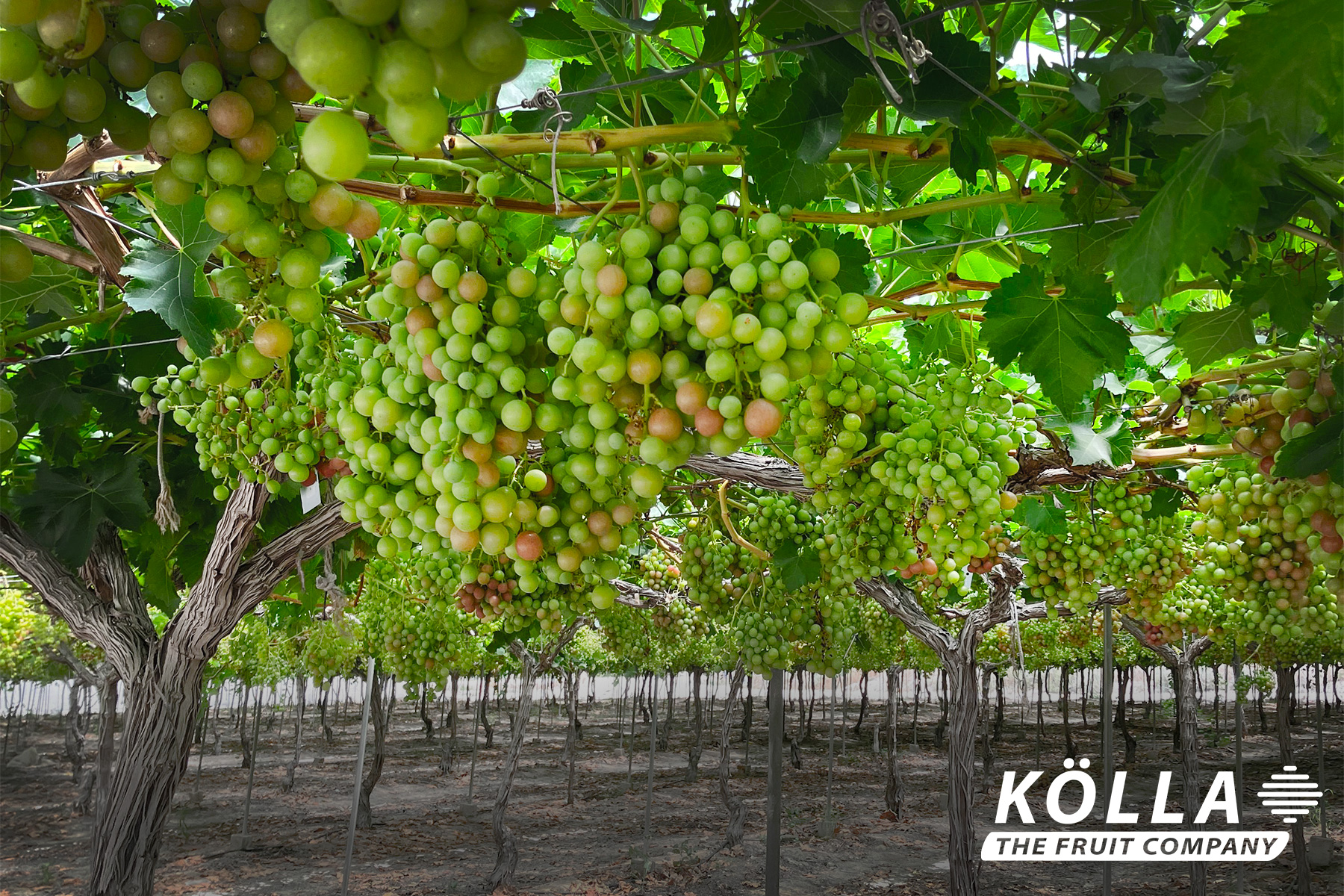
A Strong Start with Clear Direction
The European table grape season is a key focus for KÖLLA every year and has long been closely linked to our business. Accordingly, we closely monitor developments across all origins – directly on site, in continuous exchange with our production partners, and with a clear focus on quality, availability, and market requirements.
For the 2026 European grape season, an overall positive picture is already emerging at an early stage: The main producing regions across Europe are starting under stable conditions, providing a solid foundation for balanced supply and convincing quality.
Weather: A Stable Basis with Regional Variations
Climatic conditions over recent weeks and months have created a solid foundation across most European regions. In Spain and Greece, winter and spring remained largely stable. Adequate rainfall, sufficient chilling hours, and calm conditions during the flowering phase have supported even bud break and healthy fruit set.
In Italy, the overall situation is also positive, although more varied on a regional level. In Apulia, cooler spring conditions and higher rainfall led to a slight delay in development, currently measured in just a few days. Weather conditions in Sicily were more dynamic. A pronounced cold spell during the transition into spring – combined with strong winds and heavy rainfall – significantly slowed vine development. Continued unstable weather conditions have contributed to a slight delay in coloration and sugar accumulation.
At the same time, these events did not cause any lasting damage to the vineyards. Vine health remains strong, and with rising temperatures, the current delays are expected to largely level out over the course of the season.
“We currently see a slight shift in timing, but no fundamental issues in development. What really matters is that the plants are healthy – and they are,” explains Nicola Melillo.
Structural Change in Production: Clear Focus on Modern Varieties
A defining feature of the current season is the ongoing structural shift within the varietal landscape. Following years of diversification, producers are increasingly focusing on a smaller number of high-performing and marketable varieties. Modern, protected varieties continue to gain importance across all origins, particularly in the seedless segment.
Italy remains one of the key drivers of this development. Varieties such as Autumn Crisp continue to gain relevance, while new red varieties are steadily replacing older standard types. Spain is further strengthening its position in licensed varieties, while Greece is gradually modernizing its portfolio and closing the gap with more established origins.
From KÖLLA’s perspective, this trend clearly leads to higher quality, more stable programs, and greater differentiation within the European market.
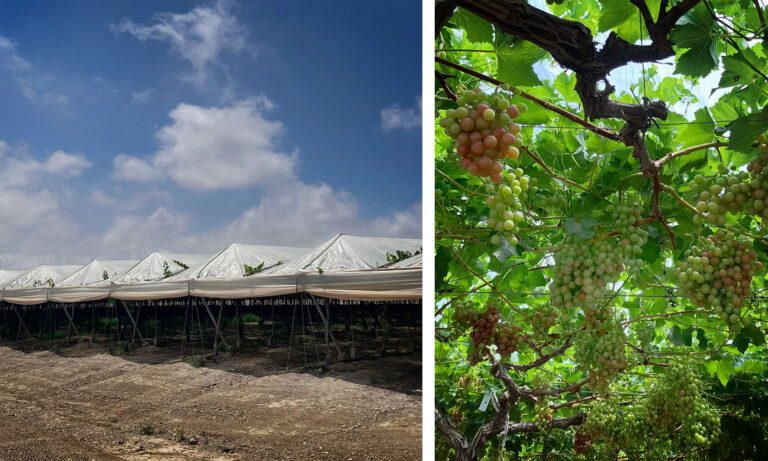
Volumes and Quality: Stable Supply at a Good Level
Initial assessments of both volume and quality are largely positive.
While slight reductions are observed in some regions – particularly for early varieties in Italy – overall supply remains well balanced. Spain and Greece are broadly in line with last year’s levels, and Turkey is expected to provide good availability, particularly in the late season. Early shipments show good quality levels. Fruit development is uniform, and the increasing summer temperatures are expected to further support ripening, taste, and sugar levels.
“Fruit development is currently very consistent – especially the stable conditions during flowering have been key to the quality we are now seeing,” says Jorge Martinez Cañamas.
Costs and Framework Conditions: Still Challenging
Despite the positive agronomic outlook, cost pressure remains one of the key challenges of the season. Rising costs for energy, transport, packaging, and inputs continue to shape production conditions across all major origins. At the same time, labor availability remains a limiting factor in certain regions.
Regulatory requirements – particularly in the area of plant protection – continue to tighten and require further adjustments in production practices.
These factors have become part of the structural environment of the industry and increasingly influence pricing dynamics and market behavior.
Market and Competition: More Structure and Greater Discipline
Following the difficult experience of the previous season, which was characterized by persistent oversupply, a much более cautious market approach can be observed. Both producers and marketers are acting more conservatively and are closely aligned with actual market conditions. Early price agreements, which characterized the previous season, have largely been avoided this year in order to better adapt to real market developments.
“The market is clearly more rational this year – decisions are increasingly driven by actual demand,” explains Marcus De Luca.
At the same time, the individual origins are becoming more differentiated and are leveraging their respective strengths:
Spain positions itself through modern varieties and efficient production structures, Italy benefits from diversity and deep expertise, while Greece continues to expand its market presence. Turkey complements the late season with additional volumes.
Together, this results in a well-balanced overall picture, ensuring a stable supply throughout the season.
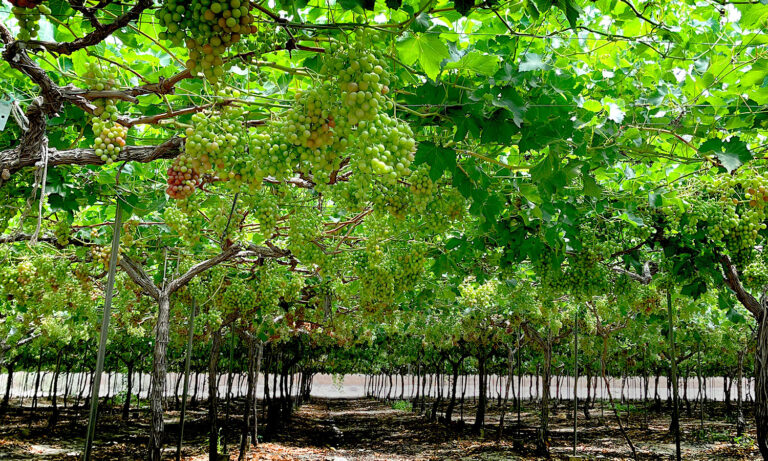
Risks in Focus – but Manageable
Despite the positive outlook, seasonal risks remain. Weather conditions – particularly heat waves during summer or wetter phases in autumn – can affect fruit quality and shelf life depending on the region. Plant health issues and regulatory changes also remain relevant factors.
A significant share of these risks can be managed today through adapted production strategies. However, production continues to depend on external, uncontrollable factors. Extreme weather events may still have a local and immediate impact on production and can significantly influence the development of individual varieties.
Market Assessment and Outlook
“It will be crucial to place volumes consistently and in line with market demand – avoiding uncontrolled oversupply. At the same time, we must ensure that the significant increase in production costs is realistically reflected and that the high investments in new varieties are recognized by the market. We strongly believe that, through the joint efforts of the entire supply chain, overall grape consumption will continue to grow sustainably,” says Alberto Hoffmann.
The 2026 season confirms a clear trend: European grape production is becoming increasingly structured, professional, and aligned with market requirements. Clear varietal strategies, stable production structures, and closer alignment between production and marketing are at the center of this development.
For KÖLLA, this means entering the season with a solid starting position, expecting reliable supply, and seeing attractive opportunities across the market.
June 2026